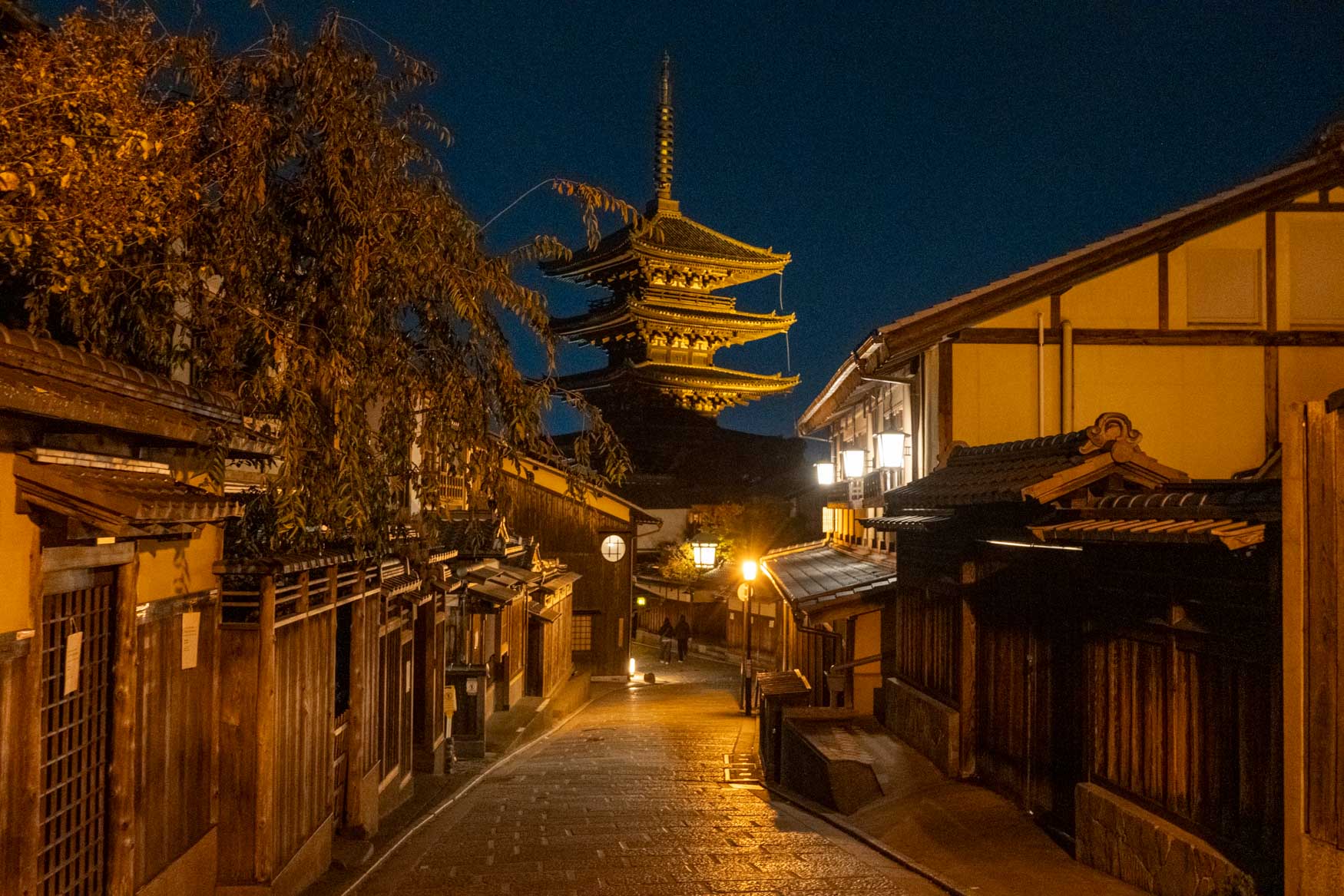
Today we have to talk about Japan. In the last few years, it’s seemed like everyone I know has been going to Japan or talking about going to Japan. And the tourism numbers support this: Japan has smashed its own tourism records every year for the last several years post-pandemic.
Japan has rapidly become a top tourism destination in the world — and it’s not surprising, considering the country’s long history, rich culture, and incredible food.
I added myself to the list of people intrigued enough by Japan to plan a trip last fall. And I can now say this: I get it. I get the hype and understand why so many people love this country!


Top things to know about visiting Japan
Despite Japan’s rise in popularity, the country is still a bit “exotic” to a lot of potential visitors. And that inevitably means that many people are hesitant about visiting for various reasons; maybe the language barrier, or the food, or the price of travel, etc.
So, after my own trip to Japan and all the research and planning I did for it, I thought I’d share some of the top things I learned or observed while there to help you prep for your own Japan travels.
Japan isn’t nearly as intimidating in-person as it might seem on paper!
1. Japan is very safe


I did half of my Japan trip in a small group, and the other half solo. And even on my own in big cities like Tokyo and Kyoto, I felt very, very safe at all times. I’m no stranger to solo female travel, of course, but even if I was relatively new to it, I know I would have felt safe in Japan. (I even went on a solo hike in Kyoto!)
Japan overall has a very low crime rate, and an even lower rate of violent crime. Even petty theft like pickpocketing is less of an issue here — though of course I always recommend being aware of your surroundings and keeping a close eye on your valuables, no matter where you are. But walking around with an open tote bag or your iPhone in your back pocket? Probably fine in most parts of Japan, honestly.
As a woman exploring on my own, I did not experience any catcalling, did not feel unsafe walking at night, and honestly just didn’t get any creepy vibes at all. (There are reports of women sometimes being rubbed on/touched by men in very crowded subway/train cars, but I never experienced this myself nor saw anyone acting inappropriately on the trains — but there are now women-only subway cars on some of the busier lines in cities like Tokyo!)
Bottom line, though: Japan is probably way safer than wherever you currently live, especially if you’re from the US like me.
2. There IS a language barrier

The most intimidating thing about Japan for me before my first trip was the language barrier, since not only do I not *speak* any Japanese, but I also can’t read a single character. English is also not widely-spoken outside of the major cities in Japan, which can make a language barrier seem insurmountable.
But guess what? It really wasn’t that big of a deal! In cities like Tokyo and Kyoto (and many others), you’ll actually find signs at the airport and train stations in both Japanese AND English — plus the trains are all color-coded, and in cities like Tokyo the lines all have English letters associated with them (this was all added in the lead-up to the 2020 Olympics in Tokyo!).
ATMs and self-service machines usually have a button for English, too.
And, at the end of the day, Google Translate is very, very useful. Get yourself a eSIM for Japan (I used one from Airalo), and then you can use Google Translate to translate everything from menus (use the photo option) to spoken Japanese. I had a lovely conversation with the owner of a small izakaya using just Google Translate!
It *is* slightly more difficult to navigate the language outside of Japan’s larger cities, but it’s totally doable if you just take your time.
3. Japan is very clean

This one is true: Japan is an incredibly clean place. Most of this comes down to Japanese culture and their strong sense of politeness, respect, and putting the good of the group/community first.
Everywhere from temples to train stations to even the trains themselves are kept very clean; it’s actually jarring to see litter anywhere in Japan. (Though the viral TikTok videos of people walking around Japan in white socks and claiming they remained totally clean are obviously made up; streets are streets, and a lack of litter doesn’t mean a lack of dirt!)
But while the “clean enough to not dirty your socks” rumor is false, one stereotype that is absolutely true is the one about how difficult it is to find a trash can in Japan. You will definitely have to carry around any trash you make or accumulate throughout the day. (I also think this is why tourists are told not to walk and eat in Japan; it’s not entirely a “being rude” thing, but moreso that there won’t be anywhere for you to throw out your trash if you walk away from the conbini. Most convenience stores do have garbage cans!)
4. There are public toilets everywhere

Speaking of conbinis (convenience stores like 7-11, Family Mart, and Lawson), they are truly magical places — and many have free public toilets!
Unlike many big cities around the world, cities in Japan have lots of free public toilets available. You’ll find them in train stations, lots of convenience stores, shopping centers, parks, and more. And, because this is Japan, these public toilets are usually quite clean!
And while *some* public toilets might be squat toilets, in my experience most of the ones you’ll come across in big cities in a 7-11 or train station will be Western style — and will have a bidet and heated toilet seat; it’s just how it’s done in Japan!
I use an app called Flush to find public toilets when I travel (one of my favorite travel apps), and it was absolutely lit up in places like Tokyo.
One thing to note about Japanese restrooms, though: while they will be clean and usually stocked with toilet paper, they might lack soap and any way to dry your hands (like, we’re talking zero towels and zero hand dryers in many cases). You’ll see Japanese people carrying around little towels specifically for drying their hands in public restrooms; pick up a cute one as a souvenir, or come prepared with your own towel (something like this is perfect) along with hand sanitizer or some soap sheets.
5. You’ll need cash

Despite Japan being touted as a futuristic, high-tech destination with bullet trains and robot toilets, many aspects of the country are not actually that advanced. For example, you still need cash in a lot of cases; I had to find an ATM on arrival in order to buy a train ticket from the airport into the city center!
Lots of shops are cash-only, too, and if you visit a temple with a entrance fee or want to purchase anything there, you usually need to pay with cash.
The good news is that every convenience store has an ATM that’s safe to use, so as long as you come with a debit card (and let your bank know you’re traveling ahead of time), you won’t have trouble getting cash.
Pro tip: Most people in Japan use some form of IC card (Suica, Pasmo, and ICOCA are some popular ones), which is a rechargeable contactless smart card that you can use to pay for most public transit across Japan. You can also use most IC cards at convenience stores and even some restaurants. You can buy a physical card at most major train stations, or if you use an iPhone you can use the Welcome Suica app and load money on it seamlessly using Apple Pay.
6. You will absolutely walk your feet off

You’ve maybe already heard this about Japan, but definitely be prepared to walk A LOT. Like, it’s not unusual to walk anywhere from 15,000-25,000 steps a day in a city like Tokyo as you visit shrines and museums and shopping areas.
Good shoes are absolutely essential, as is a good plan for each day so your itinerary doesn’t have you criss-crossing the city multiple times. (Though even with a good plan, still prep yourself to spend a lot of time on your feet!)
7. Train stations can be like cities themselves

Speaking of all that walking… in cities like Tokyo, a lot of that walking might be inside train stations alone! The biggest train stations in Japan aren’t just places where you hop on a train or subway. Many cover multiple city blocks and are connected to malls and shopping centers.
If you’re going to be transiting through the biggest stations to catch a train, or on your way to a timed activity, give yourself plenty of time! I got lost in Shinjuku station in Tokyo for a good 20 minutes. And Tokyo Station? It’s worth it to visit on its own to shop on Character Street (where they have shops dedicated to Japan’s cutest characters, brands, and mascots) and eat on Ramen Street — both of which are inside the station.
Train stations in Japan have plenty of signage (and these days most of the bigger ones have signs in Japanese characters AND the English alphabet), but can still be extremely overwhelming. Google Maps does a pretty good job with directions for transit in Japan (the app will even tell you which train car to get in, and which exit to leave through), but it’s not perfect. So definitely allow yourself plenty of time!
8. Pack light if possible


I know, I know, nobody likes to be preached at about how they pack, or to be shamed by carry-on-only travelers about checking a bag. You do you! BUT, I need you to know that traveling with a lot of luggage in Japan can be tricky.
Yes, there are luggage-forwarding services that you can use to send your big bags between cities. These services are super useful and affordable, and people definitely use them! But you need to know that transferring luggage is not instantaneous; you need to allow at least 24 hours (or more) for delivery in most cases. Meaning you’re going to have to be carrying your toiletries and overnight essentials regardless, since if you send your bag out from Tokyo on Monday morning, it won’t make it to Kyoto until Tuesday at the earliest.
If you’re moving around a lot in Japan, luggage forwarding is probably just going to be frustrating.
And trying to travel on trains and public transit with really large luggage? I would not recommend it. Not all train stations in Japan are suitcase-friendly. (Or, they might be, but you might have to walk a lot of extra steps to find an elevator or escalator.) Also, in order to bring large luggage onto most Shinkansen trains, you need to book a special seat near a luggage rack — and obviously these seats are limited.

So for these reasons, I highly, highly recommend traveling to Japan carry-on-only. Yes, I know packing like this can be hard, but if you’ll be moving around a lot, I promise you will thank yourself later. (Here are some tips on how to do it.)
Plus: So many hotels in Japan have public laundry rooms with really nice coin-operated washing machines AND dryers! You can usually do a load of laundry (wash and dry) for around 300-400 yen ($2-$2.50 USD). I did laundry twice on my 2.5-week trip to Japan.
And if you’re worried about how you’ll get all your shopping home if you’re only bringing a carry-on? My advice would be to save the bulk of your shopping til the end of your trip. Then, if you need to pick up an extra suitcase or duffel bag, at least you’ll only have to lug it to the airport and not all over Japan with you.
9. Japanese food isn’t just sushi and ramen


This should be an obvious one, but Japanese people don’t subsist solely on sushi and ramen in their everyday lives. Yes, you’ll find lots of sushi and ramen options in Japan. But if you don’t enjoy one of those foods, don’t fret about not being able to find something to eat!
Will you encounter different kinds of foods in Japan than you’re used to at home? Maybe! I would encourage you to try all the food options at least once; try sushi fresh from the source; have a kaiseki dinner (a multi-course traditional meal) at least once; order the Japanese breakfast.
But if at any point the miso soup and rice and fish just aren’t hitting for you any longer, know that you can also find tempura, tonkatsu, curry, soups, beef (including burgers), and more. And in a pinch you can hit up a convenience store for “safer” foods like sandwiches, onigiri, baked goods, and smoothies.
As a non-sushi-lover myself, I thought for years that I would struggle with the food in Japan. But I was so wrong, and had no issues finding good places to eat.
10. Japanese hospitality is another level

The Japanese take hospitality very seriously. Hospitality here isn’t just being polite to guests; there’s a word for it, omotenashi, which is basically the “art” of wholeheartedly providing sincere and genuine service without expecting anything in return.
It manifests differently depending on the situation; it could be as simple as a bow when someone greets you, or a tiny origami crane left on the pillow in your hotel room. Or it could be larger gestures, like the owner of an inn going out early in the morning to buy fresh-basked croissants for our group of mostly-Americans because she knows we like pastries at breakfast.
On my first trip to Japan, I spent about a week traveling around the Tohoku region (the northern part of Honshu Island, north of Tokyo), where the omotenashi is taken to an entirely different level. Here, it’s common for people to walk guests out to their vehicles and then stand and wave goodbye until they can’t be seen any longer.
It’s worth noting, though, that the Japanese sense of hospitality and their cultural aversion to anything deemed confrontational can sometimes lead to some funny and/or frustrating situations. For example, if you ask a local for directions and they don’t know, some people might just give you wrong information instead of saying they can’t help you.
11. You’re welcome to experience the culture

Aspects of Japanese culture — like anime and the kawaii aesthetic — are enjoyed beyond the borders of Japan. But even within Japan, tourists are allowed, expected, and even welcomed to enjoy and even participate in Japanese culture.
For the most part, as long as you’re doing things without the intention of making fun of or disrespecting the culture, most Japanese people don’t care.
Some examples: tourists are welcome to visit and even pray at Shinto shrines and Buddhist temples, even if it’s not your religion. It’s also not seen as cultural appropriation to dress up in a kimono and take photos — as long as you’re wearing the garments correctly. And you are welcome to attend sumo matches, baseball games, and more.
For the most part, local people encourage non-Japanese people to participate in Japanese cultural activities; they see it as appreciation for their culture, of which they are very proud.
12. Minimize your contribution to overtourism

Did you know that Japan wasn’t really viewed as an appealing place to travel before the mid-2010s? It took a big pro-tourism campaign from about 2013-2015 to position Japan as a desirable spot for international visitors. Now, though, parts of Japan are at risk of being loved *too* much.
Overtourism is a real and growing problem in parts of Japan — partially because most people follow a similar Tokyo-Kyoto-Osaka itinerary when they visit Japan, and they all try to visit the same handful of places they’ve seen on social media.
I’m not telling you to skip all those popular sites (I wouldn’t expect you to!). But I do need you to know that there are so many OTHER great parts of Japan to explore, too, that are just as beautiful as the ones you see over and over again on Instagram.
On my own first trip to Japan, I mixed popular spots with less-crowded ones. For example, in Tokyo I visited Shibuya and Senso-ji temple, but also spent a day in the quieter Yanaka neighborhood. In Kyoto, I visited Fushimi Inari shrine, but hiked a back way up the mountain. I also traveled to non-touristy places like Sendai and Morioka (with a group), and spent time in Kanazawa instead of Osaka.
There are so many ways to build a Japan itinerary. Don’t feel pressured into just doing what everyone else does.
And if you’re going to some of those popular and overcrowded spots anyway? Try to go later or earlier in the day, DON’T complain about “all the tourists” when you’re one of them, and treat the site with respect. Anti-tourism sentiment isn’t super common in Japan, but it’s definitely growing.
There are so many other things I could tell you about Japan, but some of it you just have to experience and find out for yourself!
One thing I can guarantee, though, is that Japan will very likely live up to your expectations of it — there’s a reason, I think, that so many people return again and again.
You can find even more Japan tips in this post over on Instagram:
Who’s ready to plan a trip to Japan?

Amanda Williams is the award-winning blogger behind A Dangerous Business Travel Blog. She has traveled to more than 60 countries on 6 continents from her home base in Ohio, specializing in experiential and thoughtful travel through the US, Europe, and rest of the world. Amanda only shares tips based on her personal experiences and places she’s actually traveled!