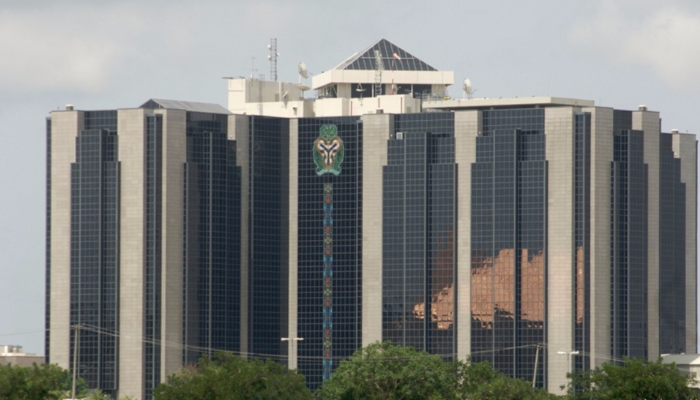
The Socio-Economic Rights and Accountability Project (SERAP) has filed a lawsuit against the Central Bank of Nigeria (CBN), demanding a full account of an alleged N3 trillion in missing or diverted public funds.
The lawsuit is also seeking accountability over the sum of N629 billion reportedly paid to “unknown beneficiaries” under the Anchor Borrowers’ Programme.
In a statement released on Sunday, SERAP said the legal action followed what it described as “grave allegations” contained in the latest annual report of the Auditor-General of the Federation, published on September 9, 2025.
According to the group, the suit marked FHC/ABJ/CS/250/2026 was filed last week at the Federal High Court in Abuja, seeking an order of mandamus to compel the apex bank to disclose the whereabouts of the funds and provide detailed explanations of how they were spent.
What they are saying
SERAP argued that the findings in the Auditor-General’s report suggest serious breaches of constitutional provisions, the CBN Act, and established anti-corruption standards.
The organisation stated that the alleged diversion of funds reflects a broader failure of accountability within the central bank and undermines public confidence in the management of national resources.
- “These grim allegations by the Auditor-General suggest grave violations of the public trust, the provisions of the Nigerian Constitution 1999 (as amended), the CBN Act, and anticorruption standards,” the statement said.
SERAP added that the situation highlights the CBN’s alleged failure to comply fully with its governing laws and to uphold principles of transparency and accountability.
The group maintained that citizens have a fundamental right to know how public funds are managed and to demand accountability for any misuse.
It noted that granting the court orders sought would help secure restitution and compensation where appropriate, while also preventing a recurrence of such alleged abuses.
“Nigerians have the right to know the whereabouts of the missing or diverted public funds,” SERAP said, adding that transparency is essential to rebuilding trust in public institutions.
Flashback
This is not the first time SERAP has dragged the apex bank to court. Last year, the civil society group had also filed a lawsuit against the CBN “over the failure to disclose the details of any direct payments to the 774 local government councils in Nigeria including the amounts sent to each council.”
In that lawsuit, SERAP was asking the court to “direct and compel the CBN to disclose the details of any direct payments to the 774 local government councils in Nigeria including the amounts sent to each council since the Supreme Court judgment.”
SERAP was also asking the court to “direct and compel the CBN to disclose whether any direct payment has been made from the Federation Account with the CBN to the local government councils in Rivers State and to explain the rationale for any such payment.”
The outcome of that lawsuit cannot be ascertained as of the time of filing this report.
What you should know
SERAP was created in 2004 and registered as a non-governmental, non-profit organization under Nigerian laws.
The organization said it aims to use human rights law to encourage the government and others to address developmental and human rights challenges such as corruption, poverty, inequality and discrimination.
Among its several lawsuits against government institutions, last year, SERAP also filed a lawsuit against the Nigerian National Petroleum Company Limited (NNPCL) over its alleged failure to remit N500 billion in oil revenue to the Federation Account between October and December 2024.