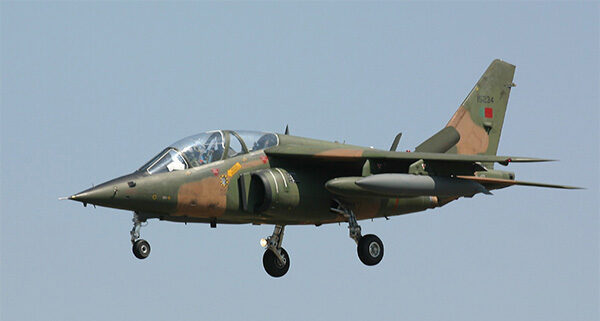
Nigeria’s military aircraft fleet totaled 159 units in 2026, placing the country 54th in the world, according to the 2026 Global Firepower (GFP) Military Aircraft Fleet Strength report.
The ranking accounts for all operational aircraft across Nigeria’s armed forces, including fixed-wing and rotary-wing platforms, and reflects the nation’s overall air power capability.
The Nigerian Air Force remains a critical pillar of national defense, supporting counter-terrorism, surveillance, troop mobility, and air support operations across the country.
What the data is saying
Nigeria operates a total of 159 military aircraft, with an estimated readiness rate of 87%, reflecting strong operational availability for its fleet. The structure of the fleet emphasizes internal security and rapid deployment rather than long-range power projection.
- The fleet includes 14 fighter aircraft and 24 attack aircraft for combat and close air support missions.
- Nigeria operates 12 fixed-wing transport aircraft and 28 trainer aircraft to support logistics and pilot development.
- Special-mission aircraft total 12 units, providing surveillance, intelligence, and reconnaissance capabilities.
- Rotary-wing platforms dominate, with 69 helicopters, including 15 dedicated attack helicopters.
The fleet does not include aerial refueling (tanker) aircraft, which limits operational range, but the composition prioritizes versatility for domestic security operations.
Nigeria in the African context
Across Africa, several countries maintain larger or more advanced air forces, reflecting different strategic priorities:
- Egypt ranks first in Africa and 9th globally with 1,088 aircraft, making it the continent’s dominant air power.
- Algeria follows with 620 aircraft, placing 16th globally.
- Angola ranks 35th globally with 278 aircraft, while Morocco and Sudan occupy 37th and 47th with 271 and 183 aircraft, respectively.
- South Africa ranks 48th globally with 181 aircraft, just ahead of Nigeria at 54th.
- Tunisia, with 155 military aircraft, ranks 56th globally, Kenya, with 154 aircraft, 57th, and Ethiopia ranks 70th with 104 aircraft.
These air forces fulfil roles including territorial defense, counterterrorism, border surveillance, peacekeeping, and regional security operations, illustrating the different operational priorities across the continent.
More insights
Nigeria has been actively modernizing its air capabilities, with major acquisitions expected to enhance operational capacity.
The country’s military aircraft fleet reflects decades of acquisitions aimed at balancing combat readiness with troop mobility and surveillance requirements.
- Over the past two decades, Nigeria expanded its air fleet to counter insurgent threats in the northeast.
- In December 2025, Nigeria signed an agreement to acquire 24 Italian-made M-346FA fighter jets.
- Nigeria is also expected to receive AW-109 helicopters from Italy, complete with maintenance and support provisions.
These platforms will be deployed for counter-terrorism operations, surveillance, troop mobility, and air support across Nigerian territory.
Overall, Nigeria’s combined military assets place the country 33rd globally, with air power forming a key part of its strategic positioning in Africa.
What you should know
Nigeria’s 2026 budget proposal allocates N5.41 trillion to defense and security, up from N4.91 trillion in 2025, reflecting increased investment in modern equipment, intelligence, and counterinsurgency operations.
- Bilateral partnerships, particularly with the United States, continue to enhance training, technology transfers, and operational readiness.
- The budget emphasizes troop welfare and the acquisition of advanced aircraft and helicopters.
- Investments in operational infrastructure aim to maintain Nigeria’s competitiveness among Africa’s leading military powers.
These measures signal Nigeria’s commitment to strengthening both its air force and broader military capabilities, ensuring readiness for domestic and regional security challenges.