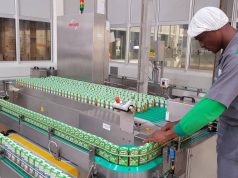
The Centre for the Promotion of Private Enterprise (CPPE) has warned that renewed calls for a sugar tax on non-alcoholic beverages could hurt Nigeria’s manufacturing sector, threaten jobs and slow the country’s fragile economic recovery.
In a statement on Wednesday, signed by its CEO, Muda Yusuf, the private sector advocacy group said while public health concerns such as diabetes and cardiovascular diseases deserve attention, imposing an additional sugar-specific tax was economically risky and poorly suited to Nigeria’s current realities of high inflation, weak consumer purchasing power and rising production costs.
CPPE argued that proposals for sugar taxation in Nigeria are often influenced by global policy templates that do not adequately reflect local conditions.
It said evidence from other countries shows that sugar taxes, when applied in isolation, have a limited impact on public health outcomes, particularly in developing economies grappling with poverty and structural challenges.
“The proposition of a sugar-specific tax is misplaced, economically risky, and weakly supported by empirical evidence, especially when viewed against Nigeria’s prevailing structural and macroeconomic realities,” CPPE said.
The organisation stressed that the food and beverage sector remains the backbone of Nigeria’s manufacturing industry.

Data from the National Bureau of Statistics show that the sector accounts for about 40 per cent of total manufacturing output, with the non-alcoholic beverages segment playing a major role in employment, value creation and supply chain activity.
According to CPPE, the industry supports millions of livelihoods across farming, processing, packaging, logistics, wholesale and retail trade, and hospitality.
Any policy that weakens this ecosystem, it said, could have far-reaching consequences, including job losses, lower household incomes and reduced investment.
Manufacturers in the non-alcoholic beverage segment are already facing heavy fiscal and cost pressures.
Existing obligations include company income tax, value-added tax, excise duties, levies on profits and imports, and multiple state and local government charges. These are compounded by high energy costs, exchange-rate volatility, elevated interest rates and expensive logistics.
CPPE noted that retail prices of many non-alcoholic beverages have risen by about 50 per cent over the past two years, even without the introduction of new taxes, further squeezing consumers.
The group also questioned the effectiveness of sugar taxes in addressing the root causes of non-communicable diseases in Nigeria.
It said rising cases of diabetes are more closely linked to poor diet quality, physical inactivity, urban lifestyles and genetic factors, rather than sugar consumption alone.
“While taxation may marginally influence consumption patterns, it does not address the underlying drivers of diabetes and cardiovascular diseases, but its economic costs are immediate and potentially severe,” CPPE said.
Instead of additional taxation, CPPE urged the government to adopt more sustainable and development-friendly approaches, such as nutrition education, community health programmes, promotion of physical activity, healthier urban planning and subsidies for nutritious foods.
It warned that introducing a sugar tax at a time when the economy is still recovering could undermine recent industrial gains and run counter to efforts to support manufacturing growth.
The organisation said Nigeria’s policy challenge is to strike a balance between public health goals and economic development, arguing that both objectives can be pursued without placing additional pressure on one of the country’s most important manufacturing sectors.