Even though the way we plan travel, the way we learn about destinations, and even the way we share and talk about our trips after we come home has changed over the years, one thing about travel has remained constant: there’s always been someone out there trying to scam us.
Yes, the travel scam has been around as long as tourism has. And though the types of scams have evolved, the basic premise has never changed; there will always be someone trying to take your money.
It’s an unfortunate reality of travel (and life, honestly). But the good news is that we have easy ways to communicate now, and we can warn one another about what kind of scams to look out for!

In 2026, here are the biggest travel scams you’ll want to keep an eye out for, from hotel booking scams to taxi scams and everything in between. (I’m also including some common ways pickpockets try to target tourists, as these are often in the form of scammy behavior, too!)
10 biggest travel scams you need to know about
These scams cover both pre-trip scams and scams to look out for once you’re on your trip. You may encounter several of these, or none at all! But even if you’re never targeted by a scammer, it’s still best to know what to look out for.
1. Apartment catfishing
A common pre-trip scam these days is “catfishing” people about accommodations, and especially vacation rentals. These scams are happening the most often on sites like Airbnb or Vrbo, where the apartment owner uploads really nice photos into a listing for a place that might not even exist.
If you’re lucky, you might just get catfished by outdated or heavily edited photos of the correct apartment that made it look a lot nicer than it actually is. But this scam often goes a lot further.
In the ultimate rental catfish scam, you’ll usually get a message a day or two before your stay (or maybe even on the day you’re supposed to check in) about there being an issue with the apartment or house (think: a plumbing leak, a power issue, some sort of emergency maintenance, etc.). The owner or manager will be very apologetic, but will luckily have another apartment free that you can stay at instead. This one will be old, dirty, and nothing at all like the one you booked — but if you don’t want to accept it, then it’ll be on you to deal with Airbnb and find somewhere else to stay last-minute.

How to avoid it: You have to do a bit of your own research and trust your gut if you’re going to book apartments through sites like Airbnb. You want to look for apartments with reviews from real people (the more the better), hosts with experience (with real photos and info about them; I try to only use Superhosts), and plenty of listing photos that don’t look like AI. And if anything at all shady happens during the booking process (including the host asking you to make a payment off-platform, which is a huge red flag), you need to find something else!
This can absolutely happen on other booking platforms, too, but is less likely to happen with established hotels or properties with lots of reviews.
2. Booking text payment scam
This next pre-trip scam is a very specific one, but I’ve had it attempted on me, so I want to include it! This is a newer one that so far I’ve only heard happening through Booking.com, but it could technically happen regarding any booking you might make.
I book many of my hotels through Booking.com (I get a loyalty discount, and find their reviews helpful), and have never had any issues. But then last year I booked a holiday apartment in Como, Italy, months in advance for a trip to the Italian Grand Prix F1 race — and got scam-targeted over it!
Several weeks after I booked, I got some messages *via WhatsApp* from someone claiming to be the owner of the rental company I’d booked with. The message mentioned an issue with my payment card, and provided me with a link to re-enter my credit card info along with a threat that if I didn’t re-enter all this info immediately, they were going to cancel my booking.

There were red flags about this message right away, including some poor English, the fact that they’d reached out via WhatsApp instead of through Booking.com, and — mostly damning — the fact that their displayed phone number was from India. I immediately clocked it as a scam and reached out to the actual owner to let them know that they may have been hacked, and to ensure that my booking was indeed still on the books (it was).
I later learned that this is a whole thing now, and apparently Booking.com hasn’t done much about it.
How to avoid it: Obviously never provide credit card info through a WhatsApp message; I actually won’t even click links in WhatsApp or even an email unless I know for sure who sent it to me. When it comes to Booking.com, I don’t do any communicating at all outside of the site/app and its official messaging feature (unless I’ve already checked in, or have given a hotel employee the okay to text me elsewhere).
3. Visa service scams
This one definitely is not new, but it certainly is easier than ever to fall for a visa scam thanks to terrible search results, undisclosed ads, and AI slop all over the internet.
Getting people to pay a little extra to use a visa “service” to obtain travel visas has been around for a long time; and in some cases it might still be useful for tricky or time-intensive visas. But the days of needing to mail your passport away with tons of paperwork for basic travel visas is mostly over; these days, you can do the vast majority of this yourself online if you’re from the US, Canada, UK, or Australia (which most of my audience is).
The most recent example I can share of this is the new ETA (Electronic Travel Authorization) that most travelers need to enter the United Kingdom as of 2025. This ETA is a quick online form you need to fill out a couple days before a UK trip, and only costs £16 and is good for 2 years. But if you do a Google search for “UK ETA,” the first couple search results will take you to websites that are going to charge you a fee to use their visa “service” on top of what the ETA actually costs.
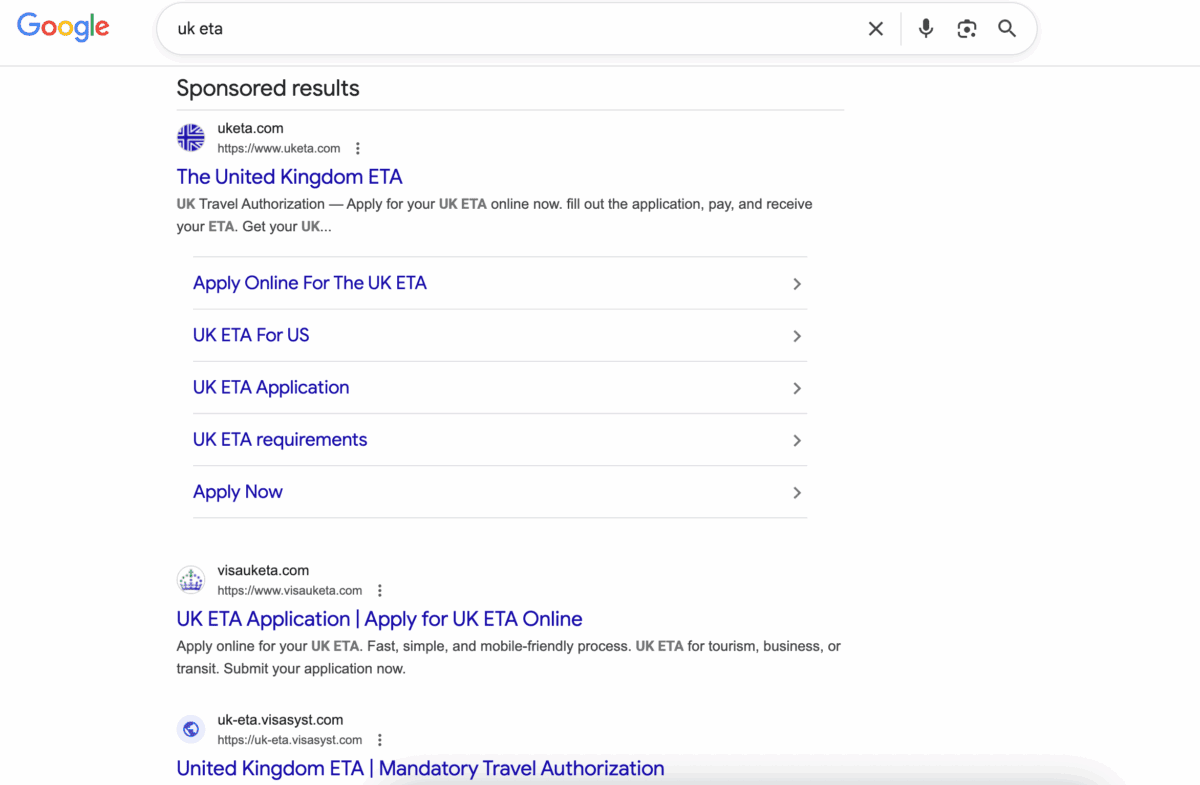
For the basic ETA that most people need, there’s absolutely zero reason you would need additional “expert” help.
How to avoid it: When you’re looking for travel visa info, you want to look for the official government site, always. And be very careful, because sometimes search results can be misleading upon first glance! (For the UK ETA, the site you want is https://www.gov.uk/eta/apply, by the way!)
4. Taxi scams
I think taxi scams have been around about as long as the concept of taxis, so it’s always a good idea to look up the most common taxi scams in the destination you’re headed to.
Generally speaking, the most common scams revolve around overcharging tourists, whether it’s quoting incorrect prices, “forgetting” to turn the meter on (insist on this when you get in!), or claiming to not take credit card payments even if they are legally required to.
These days it’s also really important to ONLY get into official taxis. All those guys hanging out inside the airport arrivals hall asking if you need a taxi? Yeah, ignore those guys and find the official taxi stand instead, or use an app to call a car.

How to avoid it: If you plan to use an airport taxi (the most likely spot to get scammed), be sure to do a quick search for typical taxi prices so you know what you should be paying — in some cases, airport taxi rates are actually a set, flat amount! Or, pre-book an airport pickup using a company like Welcome Pickups.
5. The bracelet scam
This is one I really, really hate as it can be really aggressive sometimes. This “scam” can be found across large cities in western Europe, especially in Italy and France (I’ve personally seen it in Paris, Milan, and Florence).
The scam is usually perpetrated by two or more men armed with handfuls of woven bracelets (think: old school friendship bracelets) in very busy/crowded tourist areas. A man will approach you and either offer you a bracelet, or sometimes just grab your arm and tie one around your wrist if you’re not paying attention. They’ll be really nice until you try to walk away — at which point they will demand you pay them for the bracelet.
Sometimes this scam is done with different items (like roses, especially in Italy), but the bracelets are really common. Also, they’ll target both women and men!

Many years ago I had one of these men grab at me in front of Sacré-Cœur in Montmartre in Paris, and I think I surprised him by telling him to “get your fucking hands off me.”
Similar scams happen in other countries, too. In Morocco, for example, you have to watch out for all sorts of scams in Jemaa el-Fnaa in Marrakech, including the “Henna Ladies” who will grab your hand and just start drawing (bad) henna on it before demanding payment; and the men walking around with things like monkeys who will walk up to you and put the animal on your shoulder and then demand money for you to take a photo.
How to avoid it: Just stay aware in crowded tourist spots in major cities (which you should be doing anyway!), and never take ANYthing someone tries to hand you; it’s never going to be free. You can usually spot these sorts of people in crowds since they’re often carrying tons of bracelets or roses or, you know, monkeys, so just steer clear if you see them.
6. Petition scams
Another one to look out for especially in large European cities like Paris is the petition scam. Groups of young people — often young women, sometimes teens — will fan out in front of popular tourist attractions (the Eiffel Tower and Louvre are popular spots for them in Paris) armed with clipboards. They will approach you, ask if you speak English, and then point to whatever is on their clipboard; it’s usually a piece of paper saying they are collecting donations for a charity, and they might claim they are deaf or don’t speak English (though the paper they show you is in English).
These people are NOT working for any sort of charity. They’ll try to get you to sign your name and then give them a cash “donation.” But be very careful, because I’ve also witnessed them pickpocket people when they’re distracted and signing the “petition.”

How to avoid it: Just avoid the clipboard people altogether. If they approach you, be very firm in saying no (I like to tell them I know what they’re up to), and keep a close hold on your valuables like your phone and wallet. Don’t assume that one “no” will be enough, though, as they’ll often circle back later if you’re still in the same spot.
RELATED: How to Keep Your Money and Valuables Safe While Traveling
7. “It’s closed today” scam
This scam was really popular in Southeast Asia when I went backpacking there — and it’s still going strong! The way it works is that you’ll arrive somewhere like a royal palace or famous temple, and there will be someone sitting near the entrance who will tell you the place is “closed.” And then they will conveniently offer to take you sightseeing elsewhere.
These scams aren’t completely terrible, as often they will actually take you sightseeing if you agree — but of course they’ll expect payment (and may overcharge you), and they might also stop and try to make you shop somewhere owned by a friend or family member. Plus, the place you wanted to visit is very likely not closed at all, and you will have missed out on visiting it.

How to avoid it: Do a quick check online before you set out for the day to make sure the palace or temple or museum you want to visit is indeed open. And if someone is claiming something is closed when it should be open, you can absolutely go and check the actual entrance yourself.
8. The “helpful local”
Similar to the item above, you may run into “helpful” locals on your travels. Locals who might offer to help you navigate through the medina in Marrakech, or get you a good rate on a boat tour in Bangkok, or take you to a store with “better” prices than the one you originally wanted to visit.
These people are probably just trying to get money out of you, whether by just asking for it, by overcharging you, by getting a kickback from wherever they take you, or by doing a bait and switch. In some cases, it might not be the worst thing — like, if you’re truly lost in a medina in Morocco, you might happily pay someone to help you find your way out! — but most of the time you’ll probably leave feeling like you were taken advantage of.

How to avoid it: I don’t want you to completely avoid all interaction with strangers, because strangers can be the coolest people to meet when you travel! And not everyone is trying to rip you off. Just keep in mind that if someone is offering to take you somewhere or sell you something for a “great deal,” it might be a scam, or at least a way for them to ask you for money.
At the end of the day, though, if you fall for a scam and are only scammed out of the equivalent of a few dollars, don’t sweat it too much and try to let it go. They wouldn’t be such common scams if people never fell for them.
9. Having something spilled on you
My dad was actually targeted with this one in Quito, Ecuador! It usually happens in crowded areas where tourists are, and I’ve heard about it most in South America.
The scammers usually work in teams or small groups; one person will bump into you and “spill” something on you. And then another person will come up and pretend to help you clean up — but they’ll actually be trying to pickpocket you. In my dad’s case, we didn’t even see the person who put some sort of liquid on the back of his jacket, but he had at least two different men point it out and offer to go with him to the restroom to “help” him clean it off. Luckily, my dad doesn’t trust anyone and didn’t fall for it.

How to avoid it: Again, just be super aware of your surroundings and don’t have anything valuable in a pocket or bag that is easily accessible. And obviously never agree to leave your group or go somewhere like a restroom with a stranger!
Bonus: Currency conversion rip-offs
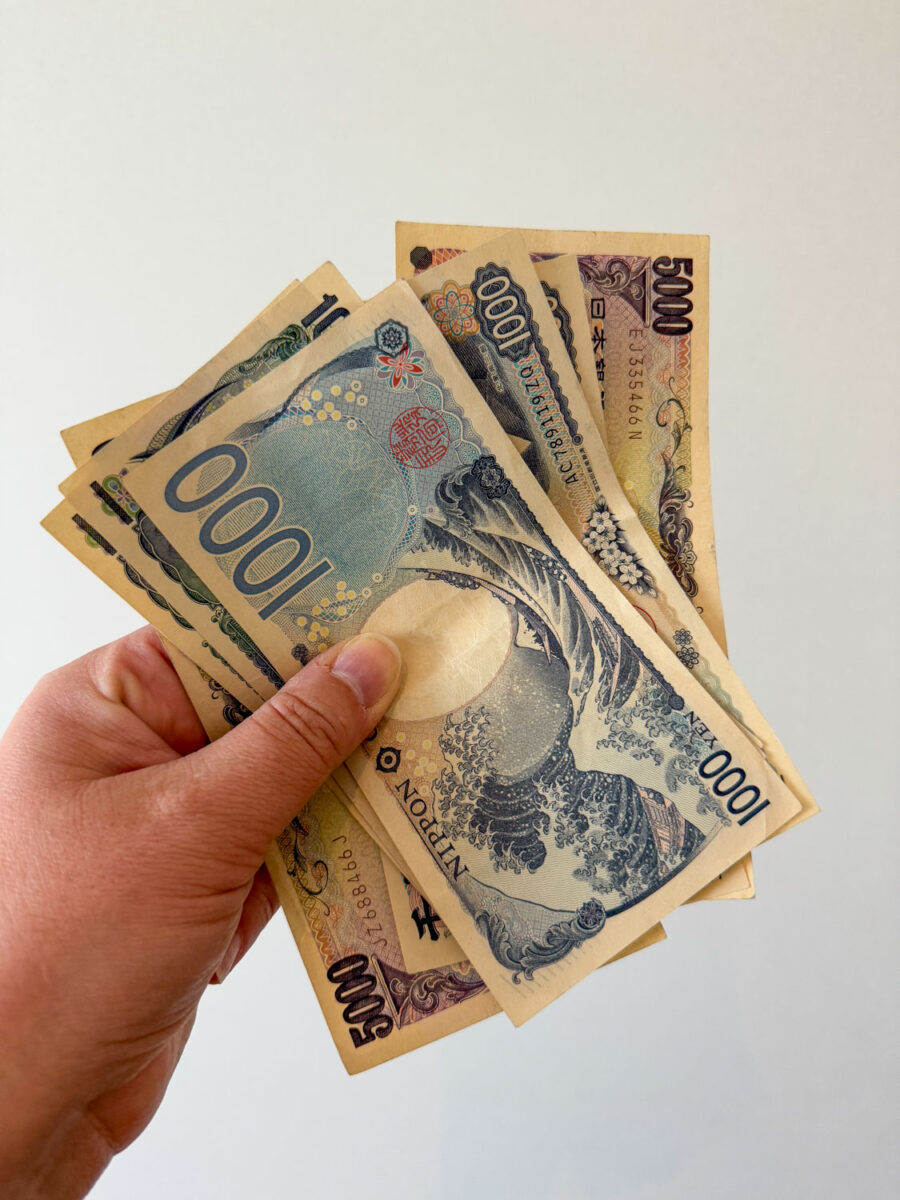
This one isn’t necessarily a scam perpetrated by individual people, but it definitely does target tourists and their money. And it’s all the ways that different institutions and businesses will try to rip you off when it comes to converting money.
There are set rates when it comes to currency conversion, but every company offering money changing services will charge a fee on top of the flat exchange rate — and some are more aggressive with their fees than others.
How to avoid it: Three things to avoid when it comes to changing and spending money abroad:
- Avoid the currency exchange counters inside airports. They notoriously offer the lowest rate and charge the highest fees. Only use them as a last resort!
- Unless you are ordering currency from your bank before a trip, get money from an ATM when you can — and use an ATM attached to a local bank and not one of those “Euronet” ATMs. Bank ATMs will offer the most favorable exchange rates. (If you need to exchange cash, local banks are also the best spot to find favorable rates.)
- Do not let the ATM or a credit card machine charge you in USD (or whatever your home currency is). If you get the pop-up screen asking if you’d like to be charged in your currency or the local currency, always choose the local currency! You’ll get the best rates this way.
I don’t wish any of these scams upon you, but if you’ve read this far, at least you’re aware of them all now! And sometimes just knowing what to watch out for can make all the difference when it comes to avoiding falling victim to a travel scam.
Have you ever been scammed while traveling?

Amanda Williams is the award-winning blogger behind A Dangerous Business Travel Blog. She has traveled to more than 60 countries on 6 continents from her home base in Ohio, specializing in experiential and thoughtful travel through the US, Europe, and rest of the world. Amanda only shares tips based on her personal experiences and places she’s actually traveled!