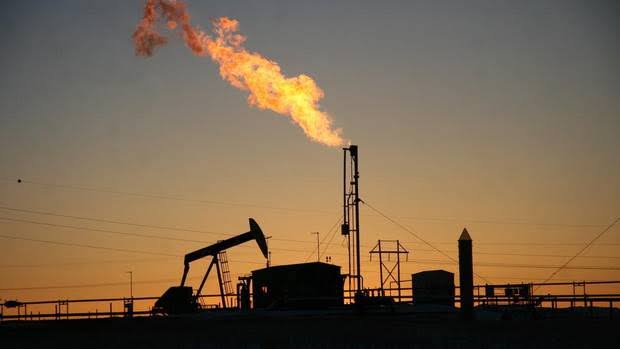
The Nigerian Upstream Petroleum Regulatory Commission (NUPRC) said it has issued permits to 28 companies to access flare gas, marking a significant step towards reducing carbon emissions and boosting energy production in the country.
The Nigerian government launched the National Gas Flare Commercialisation Programme in 2016 to involve third-party investors or off-takers in harnessing gas released as a byproduct of oil production.


The programme was one of the government’s initiatives to drive the attainment of zero routine gas flaring by 2035 and net zero emissions by 2060 in the country.
The government said 226 companies submitted bids before the project was suspended at the onset of the COVID-19 pandemic in 2020.
In October 2022, the government announced the relaunch of the programme and opened bids. In September, 2023 the commission announced successful bidders for the programme.
The NUPRC said in a statement on Friday that the commission awarded the permits to the winners at the official ceremony held in Abuja.

The commission said the permits, awarded under the Nigerian Gas Flare Commercialisation Programme (NGFCP), are expected to attract up to $2 billion in investments, create over 100,000 jobs, and reduce carbon dioxide emissions by six million tonnes annually.
The successful awardees, according to the statement, include: Ace Energy Limited; Afagaf Company Limited; AGH Lero; Almina Resources Limited; Amazon Energy Limited; AUT Energy; Beluga Asiko; Bodej Investment Limited; Cainergy Limited; Cimcmonobuo Nigeria Limited; Dawcon Consortium; Dawnwatch Limited; Fargab Limited; Folstaj International Limited; Geospectra Energy Limited; Izzi Project Limited; and MMLet Energy Limited.
Others are: MSN Consortium; Newgaz Integrated Services Limited; NG Lyon Construction Limited; Oaks Cluster Energy; Seal Energy Limited; Tecnis EPS International Limited; Teobell International; Terms Energies; Zipora Gas; and Stelog Gas Company Limited.
The Chief Executive of the NUPRC, Gbenga Komolafe, said the issuance of the Permit to Access Flare Gas (PAFG) under the 2022 NGFCP signifies the transition from legacy challenges to market-driven solutions that unlock economic opportunities, strengthen energy security, reduce emissions and improve operational efficiency across the industry.
“The commission is pleased to announce that 28 awardees have fully executed the required suite of commercial agreements, which include the connection agreements, milestone development agreements, and gas sales agreements; and now qualify to receive the permit to access flare gas. These entities represent a strong blend of operational capability, financial readiness, and technological competence,” Mr Komolafe said.
He added that the award aligns with the vision of President Bola Tinubu for the country to harness hydrocarbon resources, as reflected in the Executive Orders issued in 2024.
“Allow me to express deep appreciation to His Excellency, President Bola Ahmed Tinubu, GCFR. His reform-driven leadership and commitment to enabling the petroleum sector continues to shape the strategic direction of our work at NUPRC.
“The Presidential Executive Orders on NAG fiscal incentives and tax rebates, local content directives and cost efficiency demonstrate his emphasis on investment competitiveness for the sector,” he added.
He explained that the NGFCP was redesigned after the enactment of the Petroleum Industry Act (PIA) and refined for transparency, commercial viability, and global competitiveness.
READ ALSO: Gas Flare: NUPRC warns oil producers against frustrating climate action plan
“From 300 initial expressions of interest, 139 applicants qualified for the RFP stage.”
Following a competitive and transparent evaluation process, he said 42 successful bidders were awarded 49 flare sites, “an achievement widely recognised for its integrity and rigour,” he said.
Between 250 and 300 mmscfd of currently flared gas, according to him, will be captured and commercialised, eliminating approximately six million tonnes of carbon dioxide annually.
“The programme is expected to attract up to US$2 billion in investment. More than 100,000 direct and indirect jobs will be created. About one hundred and seventy thousand (170,000) metric tons of Liquefied Petroleum Gas (LPG) will be produced annually, enabling clean energy access for approximately 1.4 million households. And nearly 3GW (gigawatts) of power generation potential will be unlocked.”
To ensure disciplined execution, he said the commission will closely monitor the implementation of milestone development agreements, conduct regular performance reviews, and proactively address emerging barriers.