Nigeria’s rising public debt has pushed the country into a severe and “self-inflicted” fiscal crisis that is undermining human development, climate resilience and long-term growth, according to a new report released on Tuesday by the Centre for Inclusive Social Development (CISD) with support from the Heinrich Böll Foundation.
The report, titled “Mapping Nigeria’s Debt Landscape: A Burden on Youth, Climate Change, and National Development,” warns that the country’s finances are caught in a dangerous cycle in which borrowing continues to rise while development outcomes stagnate.


It shows that total public debt climbed to N144.67 trillion in the fourth quarter of 2024, while the Federal Government’s Debt Service-to-Revenue ratio reached 73.5 per cent in 2023, far above the 50 per cent sustainability threshold.
According to the study, the securitisation of N22.7 trillion in Ways and Means advances and the depreciation of the naira have sharply increased the cost of servicing external debt, which now accounts for 48.6% of the country’s total liabilities.
This has created a “Fiscal Crowding-Out Effect”, where scarce revenue is diverted away from infrastructure, health, education and climate action.
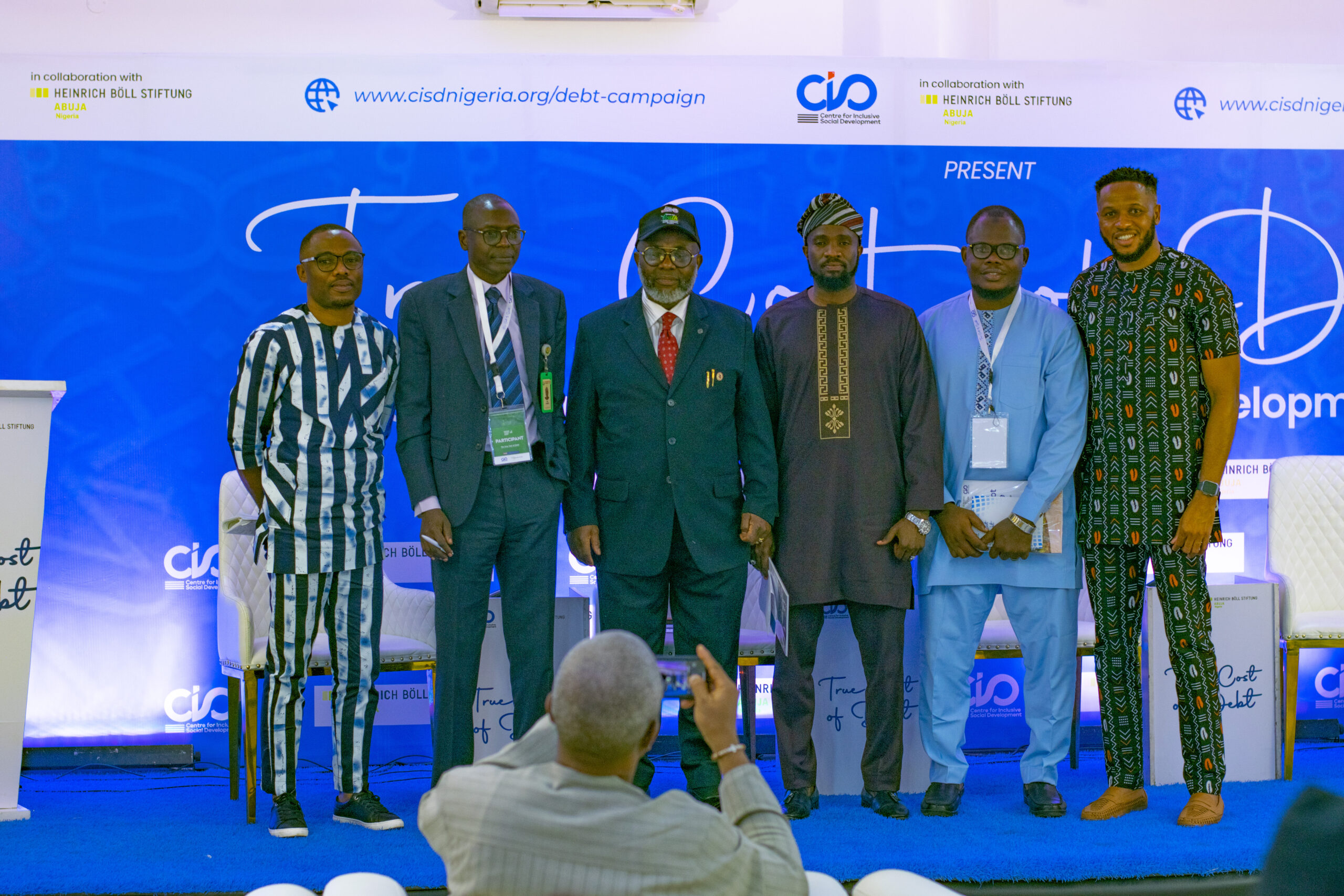
The release of the report coincided with a national dialogue in Abuja on debt and development. CISD’s Executive Director, Folahan Johnson, told participants that the human consequences of Nigeria’s borrowing spree were already visible.


He said, “The true cost of Nigeria’s rising debt is not in spreadsheets, but in the lives of vulnerable citizens.”
The report highlights how the debt burden functions as a “deferred tax” on young people, women, and girls. Chronic underfunding of education, it says, limits opportunities for children, especially girls who experience higher dropout rates, while underinvestment in health care undermines child survival and worsens maternal outcomes.
It warns that Nigeria’s fiscal crisis is denying young people the chance to escape poverty or access quality jobs.
At the dialogue, experts linked the debt challenge to the country’s climate vulnerability. They pointed to the 2022 floods, which caused losses estimated at $9.12bn, destroyed farmland and infrastructure, and further constrained already thin public finances.
Programme Manager at Heinrich Böll Stiftung, Ikenna Ofoegbu, warned that shrinking revenue space was squeezing out essential spending.

He said “our debt servicing is about 60 per cent to 70 per cent,” noting that the high cost of borrowing has pushed credit beyond the reach of ordinary Nigerians.
Keynote speaker Joseph Amenaghawon, a development expert said the pattern of borrowing without meaningful progress had become entrenched.
He argued that “we are experiencing debt without development because loans are going into recurrent spending instead of transformative capital projects.”

The report identifies two major structural risks: the heavy domestic borrowing that drives high interest rates and crowds out private-sector lending, and the reliance on foreign-currency debt that exposes states and the federal government to exchange-rate shocks.
Approximately 65 per cent of sub-national liabilities are foreign-denominated, leaving states vulnerable to sudden depreciation of the naira.
CISD said the crisis demands urgent fiscal discipline, including strict limits on non-essential recurrent spending, more efficient revenue mobilisation that does not worsen hardship, and accountable borrowing targeted at revenue-generating, self-liquidating capital projects.
It urged the government to prioritise investments that strengthen human capital and climate resilience, warning that failure to do so will leave future generations trapped by debt and deprived of opportunity.

CISD, a non-profit organisation dedicated to building inclusive systems in health, education and community development, said its findings aim to shift public debate beyond headline debt figures to the human and structural consequences of the country’s fiscal choices.