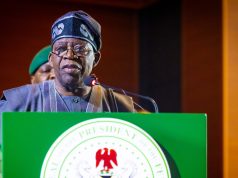
When Indian Prime Minister Narendra Modi addressed the largest Artificial Intelligence gathering in New Delhi last week, his words carried a deliberate edge. “Design and develop in India. Deliver to the world. Deliver to humanity,” he told an audience that included heads of state, chief executives of the world’s most powerful technology companies, and researchers reshaping the frontier of machine intelligence.
The India AI Impact Summit drew more than 500 AI leaders, 100 founders and CEOs, 150 academicians and researchers, and nearly 400 technology executives from over 100 countries. More than 20 heads of state and government attended, along with Alphabet CEO Sundar Pichai, OpenAI CEO Sam Altman, Anthropic CEO Dario Amodei, and Google DeepMind CEO Demis Hassabis.
It was the first time the global AI summit series was held in a developing nation. That was a deliberate signal: the Global South intends to move from the margins to the centre of the AI conversation.
While heads of state were meeting and announcing billions of dollars in aid, Africa was nearly absent.
Some countries, including Nigeria, made their presence felt at the New Delhi summit. Nigerian innovators showcased locally developed AI tools at the summit’s exhibition grounds. Among them was Nubia AI, a platform focused on transforming complex datasets into structured stories and visual insights aimed at improving public understanding and accountability.
Also on display was DUBAWA AI, a tool that converts audio recordings into text while accounting for local languages and tonal variations — directly targeting the persistent gaps in global speech recognition systems that have long failed African linguistic environments.

But there were other innovators and officials from Egypt, South Africa, Rwanda, and other African countries.
Their presence mattered. But the gap between presence and investment tells a starker story.
Technology giants Google, Microsoft, and Amazon have already committed a combined $68 billion in AI and cloud infrastructure investment in India through 2030.
Two of India’s biggest conglomerates, Reliance and Adani, pledged a combined $210 billion in domestic AI and data infrastructure investment. OpenAI signed a partnership deal with the Tata Group. Anthropic announced a partnership with Infosys and opened an office in Bangalore.
The Guterres Warning
Speaking in New Delhi, United Nations boss Antonio Guterres called for a $3 billion global fund to support AI capacity-building in developing countries, covering skills development, data access, and affordable computing infrastructure.
“The future of AI cannot be decided by a handful of countries, or left to the whims of a few billionaires,” he said, stressing that AI must “belong to everyone.”
The warning resonated with observers who have watched Africa sit at the periphery of successive technology waves — mobile internet, fintech, cloud computing — only to benefit unevenly while others captured the economic surplus.
“Africa also holds a disproportionately large share of the world’s critical minerals—the raw materials needed for batteries, semiconductors, and electronics that power AI hardware,” said the Executive Director of the Centre for Journalism Innovation and Development, Akintunde Babatunde.
Mr Modi, whose country Stanford University now ranks as the third-most AI-competitive nation in the world, behind only the United States and China, framed the summit around inclusion. “The direction of AI must be such that it benefits all of humanity,” he said, proposing a global data framework that respects data sovereignty, transparent AI safety rules, and AI development anchored in human values.
He offered his country’s digital public infrastructure — internet connectivity, digital payments, and digital identity systems — as a cost-effective model for developing nations, including those in Africa.
Jakob Mökander, director of science and technology policy at the Tony Blair Institute for Global Change, noted that India’s emergence reframes a narrowing debate. “Long term, it’s good for the world that AI is not just viewed as a race between the U.S. and China, and I think that India is right now the player that most confidently says, ‘We reject this dynamic,” he said.
Africa needs to say the same thing and back it with structures.
The African continent has fewer than 250 data centres to power one-fifth of the world’s population, while the United States alone has over 5,000.
Throughout human history, technological waves have shaped how society lives, works and interacts. The First and Second Industrial Revolutions, and later the digital and mobile waves, transformed society over years and decades, but the AI transformation is reshaping our world even faster.
For Africa, in particular, AI has the potential to boost health and development outcomes. Diseases like AIDS that were once death sentences may soon no longer be threats. Millions of people living in poverty could soon have a better quality of life. But whether this optimistic future includes Africa depends on more investment, local involvement and integration in the burgeoning AI race.
Africa has just 1 per cent of the world’s data centre capacity, and according to Bright Simons, the co-founder of the Accra-based Imani Centre for Policy and Education, Africans account for less than 0.5 per cent of machine learning and large-language models.
Experts also warn that AI systems could reinforce biases that marginalise Africa. As large-language models grow in strength, their inputs become increasingly important. According to the UN agency for digital technologies, of the top 34 languages used on the Internet globally, none are African.
Although the continent is not entirely without ambition, at last April’s Global AI Summit in Kigali, 52 African countries announced the creation of a $60 billion African AI Fund combining public, private, and philanthropic capital. The summit also projected that AI has the potential to add up to $30 billion to sub-Saharan Africa’s economy by 2030 and lift the continent’s GDP by 3 per cent.
At the gathering, Rwandan President Paul Kagame echoed the call for more AI investment to ensure Africa catches the AI wave. “We have to adapt, cooperate and compete because it is in our best interest to do so,” he said. “The potential for innovation and creativity on our continent is immense. That is already a comparative advantage which artificial intelligence can multiply.”
Africa’s $60 billion fund faces its own structural questions. Observers warn that without transparency mechanisms and robust governance frameworks, the fund risks reproducing the asymmetries already visible in how sovereign wealth funds on the continent operate — concentrating resources in the most connected economies at the expense of those with the most latent potential.
A Continent of Uneven Readiness
The challenge with African space is not only about money. It is about the conditions that attract and sustain investment.
Research from the AI Investment Potential Index shows that countries in an “emerging group” — including Ghana, Morocco, Senegal, Tunisia, and Rwanda — have favourable AI fundamentals but remain significantly underfunded. Ghana, Morocco, and Tunisia together account for around 17 per cent of African technology companies outside the Big Four – South Africa, Egypt, Kenya and Nigeria, yet attract investment volumes that bear no relationship to that potential.
What holds them back is a combination of institutional gaps, underdeveloped entrepreneurial ecosystems, unreliable energy and connectivity infrastructure, and regulatory environments that have not kept pace with the sector. Addressing those gaps, analysts argue, requires not only financial instruments but deliberate policy reform.
There are frameworks. The African Union’s Digital Transformation Strategy for Africa, its Continental Artificial Intelligence Strategy, and the African Digital Compact provide roadmaps. Tunisia’s Start-up Act and Ghana’s national AI strategy — which sets out the country’s ambition to become Africa’s AI hub — are national-level examples.
Development finance institutions, including the African Development Bank and the West African Development Bank, are launching initiatives to support the continent’s digital economy.
“Africa’s future on AI, whether it can inject its own reality, its languages, markets, systems, and values — into the models already shaping the world. AI built without African data will not solve African problems,” said Phil Anderson, sales manager for Digital Business Solutions at Datacentrix.
Execution, Not Just Enthusiasm
CJID’s Mr Babatunde put the challenge directly. “For AI to scale in Africa, execution discipline will determine outcomes,” he said.
“AI must move beyond sectoral enthusiasm and become a whole-of-government priority, embedded in budgeting processes, industrial planning, procurement reform, and measurable targets.”
That is a challenge India has begun to meet. Its government aligned AI with national economic planning, built large-scale digital public infrastructure, and structured policy to attract private investment in hyperscale data centres.
The results are now visible in the commitments made in New Delhi last week.
Anthropic CEO Dario Amodei, speaking at the summit, warned that the pace of AI development leaves little time for hesitation.
“There are only a small number of years left for AI models to surpass the cognitive capabilities of most humans for most things,” he said.
He identified autonomous AI behaviour, potential misuse by individuals and governments, and large-scale economic displacement as among the most pressing risks — risks that will fall hardest on countries without the infrastructure to govern or adapt to the technology.
READ ALSO: Nigeria must harness artificial intelligence to drive development- Okonjo-Iweala
The question that will define a generation
The India AI Impact Summit has given the world’s most populous developing nation a stage from which to shape the global AI agenda. It has drawn billion-dollar commitments, ministerial declarations, and pledges of inclusion.
Michael Kratsios, director of the White House Office of Science and Technology Policy and leader of the United States delegation, captured the prevailing mood: “Every country will want to chart their own AI destiny. They each have unique characteristics about their culture, their language, their traditions, and the way that they want to use AI.”
Africa has those characteristics in abundance. It has the languages, the problems worth solving, the youth population, and — in pockets from Nairobi to Lagos to Kigali to Accra — the innovators building for them.
What it has lacked, consistently, is the infrastructure investment, policy coherence, and political will to turn potential into scale.
The summit in New Delhi showed what it looks like when a developing nation decides it will not be a passive consumer of technology built elsewhere. Africa watched. The continent’s leaders now face a straightforward question: when the next summit comes, will Africa still be in the audience — or will it finally be setting terms?
“African Union institutions and sub-regional bodies can play a stronger role in coordinating continental AI governance principles, building shared regulatory expertise and presenting unified positions in global AI negotiations. Fragmented engagement diminishes influence. Coordinated engagement increases it,” Mr Babatunde said.