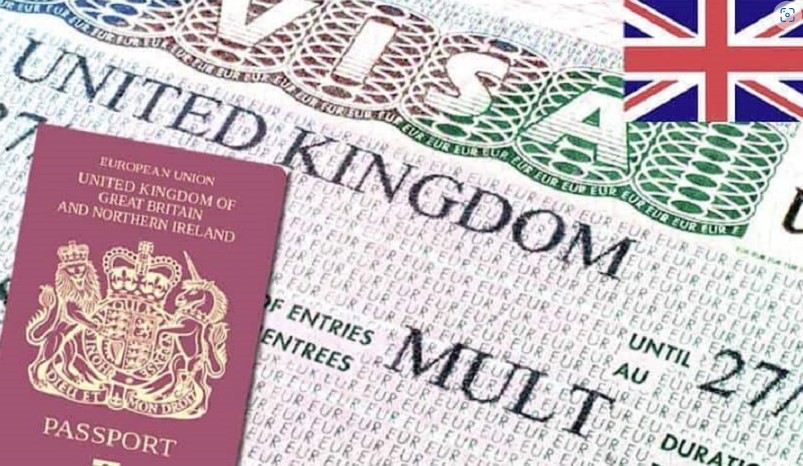
The United Kingdom has announced a major shift in its immigration process for Nigerian travellers, confirming that it will discontinue the issuance of physical visa stickers and replace them entirely with digital eVisas from February 25, 2026.
The policy change, disclosed in Abuja by UK Visas and Immigration (UKVI), means that all new UK Visit visas issued to Nigerian nationals will now exist solely in electronic form.
The move is part of the UK government’s broader transition to a fully digital border and immigration management system.
What they are saying
Under the new framework, successful applicants will no longer receive a visa vignette pasted into their passports. Instead, their immigration status will be stored online and accessible through a secure UKVI account, which travellers can use to view, manage, and share their visa details when required.
UKVI clarified that the core application process remains unchanged. Nigerian applicants will still complete the online application, attend a Visa Application Centre to submit biometric information, and meet all existing eligibility and documentation requirements.
The only difference is the method of visa issuance and verification, which will now be fully digital.
Importantly, the authorities stressed that Nigerians who currently hold valid physical visa stickers will not be affected by the transition. Existing visas will remain valid until their stated expiry dates and will not need to be replaced solely due to the rollout of eVisas.
Backstory
The February 2026 rollout builds on earlier reforms announced by the UK government. As background, the British High Commission had previously disclosed that digital eVisas would be introduced for most Nigerian nationals applying for study or work visas from July 15, 2025, replacing physical visa vignettes with secure online records.
With Nigerians now among the first cohorts to transition fully to digital visa issuance, the reform represents a significant procedural shift for business travellers, students, and frequent visitors. Passport-based documentation is giving way to a centralized online immigration record, marking a new standard for UK entry clearance and border management.
What you should know
Speaking on the development, the British Deputy High Commissioner in Abuja, Gill Lever, described the policy as a step toward simplifying travel while enhancing security.
- According to her, the shift to digital visas reduces dependence on paper documentation, improves border control efficiency, and makes it easier for genuine travellers to access and prove their immigration status.
- UKVI noted that the eVisa system is expected to deliver operational benefits for applicants, including shorter processing timelines, as passports will no longer be held for visa endorsement. Travellers will also be able to access their immigration records at any time, reducing the risk of delays linked to lost or damaged documents.
From a security standpoint, British authorities highlighted that eVisas cannot be lost, stolen, or physically altered like passport stickers. The system also enables real-time verification of immigration status by airlines and border officials, strengthening overall border integrity.