The Abia State Government has announced plans to commence the settlement of long-standing salary arrears owed to former Local Government councillors.
This is for those who served between 1999 and 2022, in what the administration describes as part of a broader effort to clean up inherited fiscal and governance liabilities.
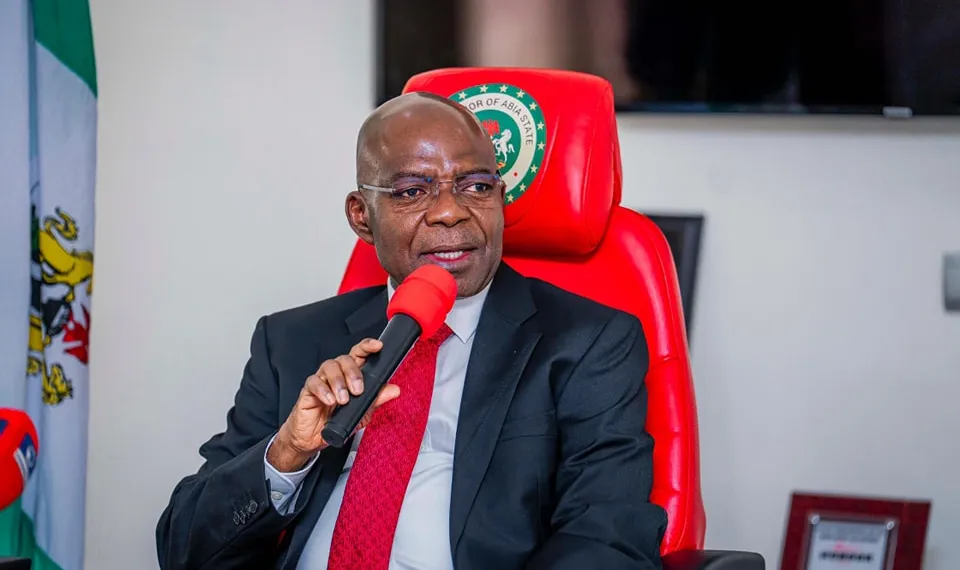
Governor Alex Otti disclosed this during a meeting with members of the Association of Former Elected Councillors in Umuahia on Sunday.
According to the governor, payment of the arrears accumulated over more than two decades will begin before the end of February and will be executed in batches.
What they are saying
Otti explained that when the issue was first brought to his attention, he was not fully briefed on its complexity, including multiple court cases and partial payments made under court orders by previous administrations. He said his government decided to harmonise all claims and resolve the disputes holistically, noting that leadership demands confronting inherited problems rather than postponing them.
- “All workers deserve equal treatment, whether they are core civil servants, non-core staff or pensioners,” the governor said, stressing that his administration stands for justice and fairness.
The governor commended the association for withdrawing all pending court cases related to the unpaid salaries, describing the move as a confidence-building step. He said the government has since harmonised all claims to ensure a transparent and orderly settlement process. With all litigations resolved, Otti assured that payments would begin before the month-end.
In a gesture aimed at institutional clarity, the governor directed the lawmaker representing Isiala Ngwa North and South Constituency, Chief Ginger Onwusibe, alongside the Commissioner for Local Government and Chieftaincy Affairs, Mr Uzo Nwachukwu, to formalise the structure of the association.
Backstory
The decision to clear the arrears comes amid ongoing fiscal reforms under the current administration.
Nairametrics had earlier reported that the Abia State Government has significantly reduced its inherited debt burden since Governor Otti assumed office in May 2023. Data from the Debt Management Office show that the state’s debt stock declined to N66 billion as of December 2024 from N138 billion inherited from previous administrations.
Within this period, the state reportedly paid down N72 billion in outstanding obligations without contracting new debt, reflecting a policy focus on fiscal discipline, credibility, and strategic renegotiation of government liabilities. The administration has consistently linked this debt reduction to its ability to meet recurrent obligations, including salaries and pensions, while funding priority infrastructure projects.
Governor Otti has maintained that addressing legacy liabilities such as unpaid wages is critical to restoring confidence in public institutions and strengthening Abia’s financial standing.
What you should know
Nairametrics previously reported that Abia State Governor, Alex Otti, presented a N1.016 trillion budget proposal for the 2026 fiscal year to the Abia State House of Assembly for consideration.
The proposed 2026 appropriation bill, titled the “Budget of Acceleration and New Possibilities,” represented a 13% increase over the 2025 budget, reflecting an expansionary fiscal posture by the state government.
Of the total budget estimate, N811.8 billion (80%) was allocated to capital expenditure, while N204.4 billion (20%) was set aside for recurrent spending, underscoring the administration’s focus on infrastructure and long-term economic growth.
The capital expenditure component reflected a 32% increase compared to the 2025 capital budget, aligning with the government’s emphasis on roads, urban renewal, healthcare, education, and other growth-supporting projects.
Recurrent expenditure rose by 33% from N136 billion in 2025, driven by expanded administrative functions and higher personnel costs following the addition of thousands of new employees to the state payroll.