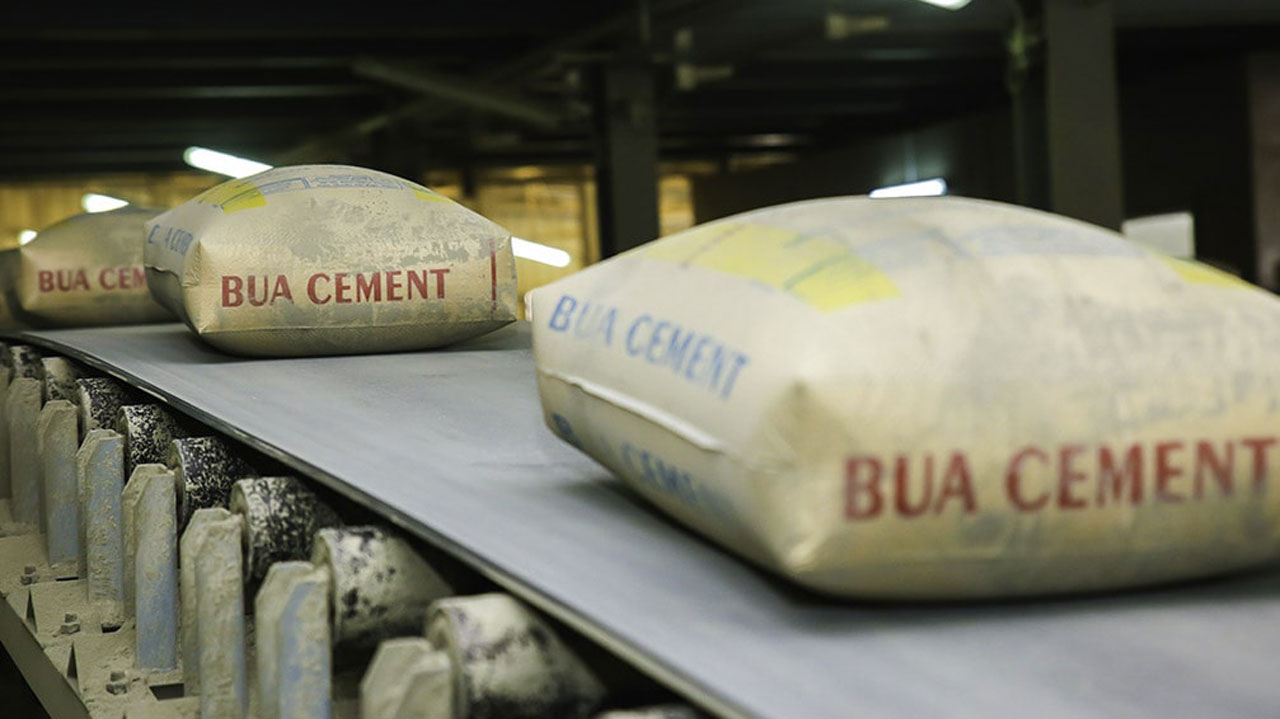
BUA Cement has begun the manufacturing of POP gypsum plasterboards at its Port Harcourt factory, barely a year after operations started at the 2,400-ton per day plant.
“Production has commenced at our Port Harcourt facility for POP gypsum plaster boards, building on the POP production we started earlier – continuing our commitment to local manufacturing in Nigeria,” Chairman Abdul Samad Rabiu stated in a Facebook post on Thursday.
The building materials maker is branching into POP production to capitalise on a supply gap in the local market, where imports have long met users’ needs.
Apart from Nigeria, the POP manufacturing plant, which has been described as the largest of its kind in the country, is looking to other West African countries to gain more market share.
Production at the Port Harcourt facility, named BUA Gypsum Plaster Limited, uses gypsum, a raw material that serves as a binder in cement, concrete, and other related products, to make white, fire-resistant moulding plasterboards.
Mr Rabiu, who holds 95.8 per cent of BUA Cement, the parent company, said in December 2024 that the facility is directing efforts primarily at the housing and construction sectors to widen its reach.

The housing deficit in Nigeria, which, according to an estimate by the International Journal of Engineering Research and Technology, hovers around 22 million units, is fuelling a boom for cement makers in a market where only three companies are the known players.
BUA Cement, Dangote Cement and Lafarge Africa reported an average EBITDA margin of over 45 per cent in the six months to June 2025, well above the figures for Europe and the rest of Africa.
EBITDA margin, an indicator of the operating profit of a business, measures a company’s profit before accounting for interest, tax, depreciation and amortisation.
READ ALSO: BUA Cement signs agreement to build new 3-million-ton-per-annum facility in Sokoto
Analysts say the three dominant cement manufacturers are using their influence and size to raise prices even when it is unjustified.
“If you look at their plant, for example, their plant size is outpacing their available demand, but yet, they are still able to increase prices,” Olaolu Femi Boboye, Sub-Saharan Africa lead economist at Cardinal Stone, told PREMIUM TIMES.