Dangote Petroleum Refinery & Petrochemicals (DPRP) on Wednesday denied reports suggesting that it imports finished petroleum products, describing the claims as incorrect and based on a misunderstanding of global refinery operations.
As a large‑scale merchant refinery, the company said it refines crude oil and processes intermediate feedstocks into premium petroleum products and petrochemicals that meet the highest international standards.
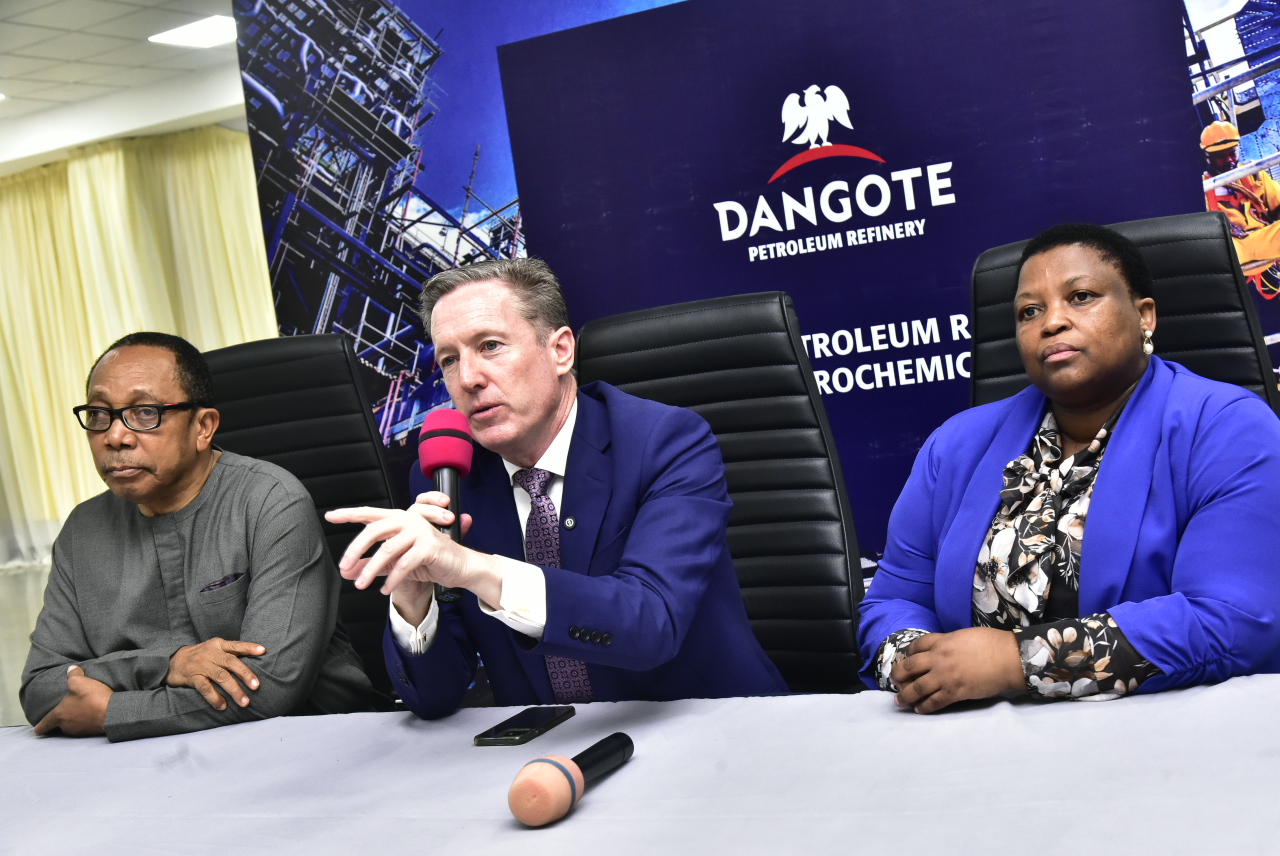
Speaking during a media briefing at the refinery, the Chief Executive Officer and Managing Director, David Bird, explained that processing intermediate or semi‑processed materials is a standard practice within the global refining industry. He clarified that this practice does not amount to importing finished petroleum products.
Mr Bird highlighted that the Dangote Petroleum Refinery operates under a European and Asian merchant-refinery model, integrating advanced refining, blending, and trading systems designed to meet modern quality and environmental benchmarks.
“DPRP produces high‑quality fuels aligned with international environmental and health standards. Our gasoline is lead‑free and MMT‑free with 50 parts per million sulphur, while our diesel meets ultra‑low sulphur specifications.
These standards help reduce emissions, protect engines, and safeguard public health,” Mr Bird stated.

He reaffirmed that the Dangote Refinery supplies only fully refined, market‑ready products, adding that semi‑finished fuels are unsuitable for vehicles and are therefore not released into the Nigerian market. Samples of both intermediate feedstocks and fully refined products were displayed to journalists during the briefing.
The CEO further noted that the refinery was established to end years of exposure to substandard fuel in Nigeria by providing products that meet stringent global standards. He added that DPRP’s products are now exported to international markets, highlighting their quality and competitiveness.
Intermediate materials
The company noted that intermediate materials—such as naphtha, straight‑run gas oil, vacuum gas oil (VGO), reformate, alkylate and isomerate—serve as feedstock for additional refining into finished fuels like petrol and diesel, as well as petrochemicals.
Mr Bird stressed the refinery’s commitment to transparency in its operations and engagements with regulators. He urged the media to help properly educate the public on the clear distinction between intermediate products and finished fuel.
READ ALSO: Nigerian press bodies urge FG, NASS to act against ‘Big Tech Threat’ to information sovereignty
“It is unfortunate that some individuals are deliberately spreading misleading narratives about a refinery that has transformed Nigeria and the West African region from a dumping ground for substandard fuels into a hub for high‑quality products,” he said.
He added that the refinery’s flexible design allows it to process a diverse mix of crude oils and intermediate feedstocks into premium finished fuels.
Mr Bird assured Nigerians of sustained product availability, noting that the refinery has contributed significantly to easing fuel scarcity, stabilising the naira, and reducing pressure on foreign exchange.
Group Chief Brand and Communications Officer of Dangote Industries Limited, Anthony Chiejina, urged journalists to be precise in their choice of terminology, warning that inaccurate reporting could misinform the public and create unnecessary panic.