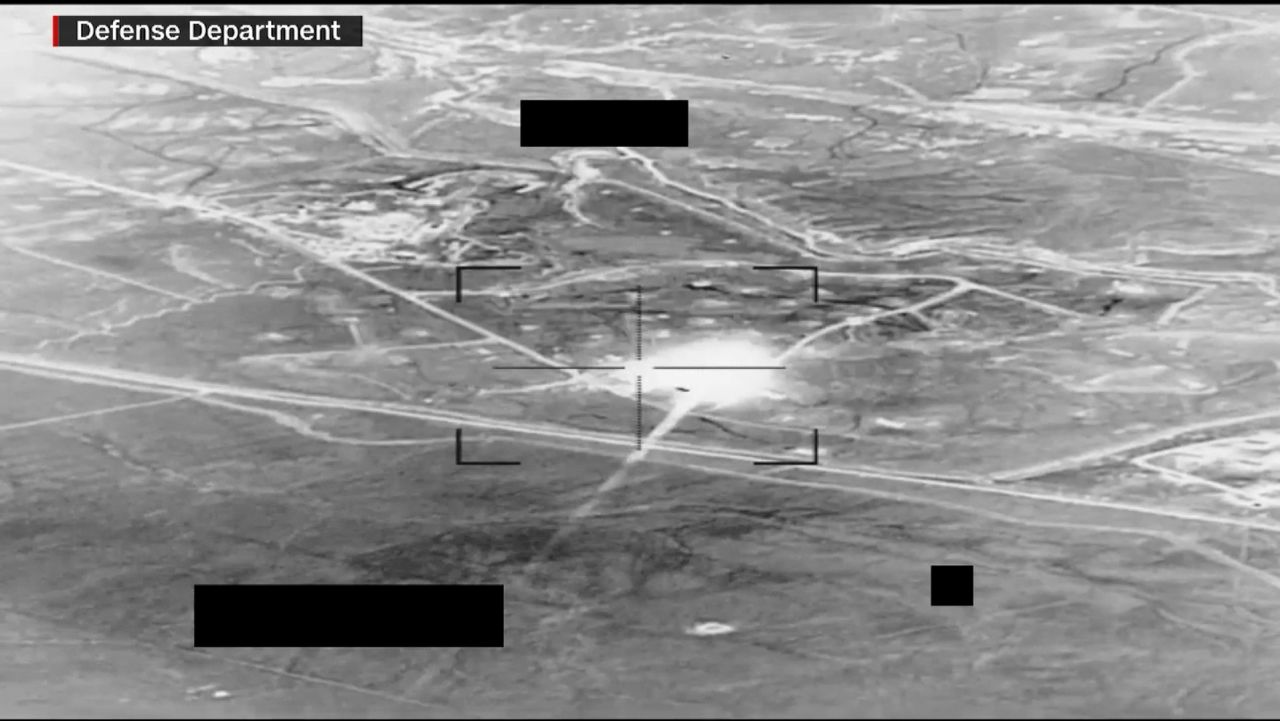
The United States carried out air strikes in Nigeria using intelligence from a screwdriver trader and small NGO operator in Onitsha, Anambra State, according to a New York Times investigation.
The report identifies Emeka Umeagbalasi as the key source whose unverified claims of Christian genocide in Nigeria were cited by U.S. lawmakers.
This revelation has triggered concerns about the accuracy of the intelligence that shaped U.S. military actions and the broader narrative surrounding religious violence in Nigeria.
According to the New York Times, Umeagbalasi claimed he has documented 125,000 Christian deaths in Nigeria since 2009 using Google searches, Nigerian media reports, secondary sources, and advocacy groups such as Open Doors.
What they are saying
The New York Times report has brought global attention to Emeka Umeagbalasi, a trader in Onitsha who also runs a small-scale NGO. His data was cited by prominent U.S. politicians in support of claims that Christians are being systematically targeted in Nigeria.
- “The man, Emeka Umeagbalasi, owns a tiny shop selling screwdrivers and wrenches in this market in Onitsha, the commercial hub of southeast Nigeria…
- “But this screwdriver salesman is also an unlikely source of research that U.S. Republican lawmakers have used to promote the misleading idea that Christians are being singled out for slaughter in Africa’s most populous nation,” the New York Times reported.
- Umeagbalasi told the Times he had documented 125,000 Christian deaths since 2009 using Google searches, Nigerian media reports, and data from advocacy groups like Open Doors.
- He admitted to rarely verifying the data and assuming victims’ religions based on geographic location, saying, “If a mass abduction or killing happens in an area where he thinks many Christians live, he assumes the victims are Christians.”
- He also claimed that 20,000 of Nigeria’s 100,000 churches had been destroyed in the past 16 years, figures he says he found by “Googling it.”
The New York Times noted that his reports have been cited by U.S. lawmakers such as Senator Ted Cruz, Representative Riley Moore, and Representative Chris Smith — and even by former President Donald Trump to justify military actions in Nigeria.
Backstory
The U.S. air strikes come amid a series of escalating actions linked to claims of Christian persecution in Nigeria.
- In October, former President Donald Trump redesignated Nigeria as a “country of particular concern” over alleged mass killings of Christians.
- Trump warned in November that the U.S. military would intervene “guns-a-blazing” if Nigeria failed to act against the so-called genocide.
- On December 26, U.S. forces conducted air strikes on alleged ISIS targets in Sokoto State, reportedly “at the request of Nigerian authorities.”
These moves were influenced by a narrative increasingly shaped by unverified reports and politically charged claims.
Why this matters
The use of questionable data to justify military intervention raises serious ethical and strategic concerns.
- Military actions based on unverified intelligence can result in misdirected strikes and civilian casualties.
- The narrative of Christian genocide, if not grounded in credible evidence, risks distorting foreign policy and fuelling sectarian tensions.
- Lawmakers’ reliance on data from an untrained source highlights the dangers of politicizing human rights concerns.
This incident highlights the importance of credible intelligence in shaping international policy and military engagement.
What you should know
Nigeria continues to face serious security challenges from various armed groups, including Islamist insurgents.
- Boko Haram and other jihadist factions have been active for more than a decade, attacking both Christian and Muslim communities.
- Nairametrics has reported extensively on the growing insecurity in northern Nigeria, including rising displacement and fatalities.
- While U.S. military operations in Nigeria are rare and usually coordinated with Nigerian authorities, the legitimacy of such actions depends on the accuracy of the intelligence behind them.
The reliance on questionable sources for military decisions may further complicate Nigeria’s security and diplomatic dynamics.