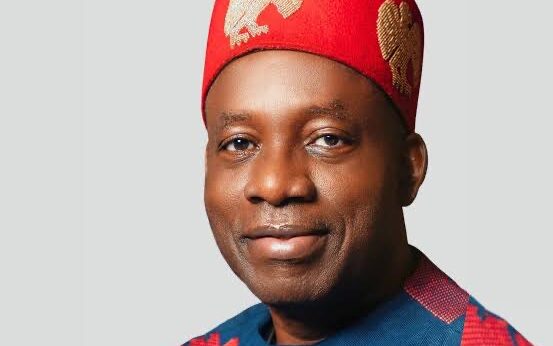
The Governor of Anambra State, Charles Soludo, has signed the Harmonized Taxes and Levies (Approved List for Collection) Law, making it the third state to sign the legislation.
The governor signed the bill into law on Monday in Awka, Anambra State, to conform with the federal government’s National Tax Reform Acts, taking effect from 1 January 2026.
This is coming after the Ekiti State Governor, Biodun Oyebanji, signed the Ekiti State Revenue Administration Law on 23 December, which aligned the state’s internal revenue laws with four new National Tax Reform Acts.
The Zamfara State Governor, Dauda Lawal, followed suit by signing the law to repeal and re-enact the Zamfara State Consolidated Revenue Laws; establish the Zamfara State Internal Revenue Service with powers for the assessment, collection, and accounting for revenues accruing to the Zamfara State Government.
Mr Lawal also signed a law to provide for the harmonisation of Tax and Non-Tax Revenue; establish a legal framework for effective tax administration and for connected matters.
State consensus
These landmark actions mark a growing consensus among states on the need to reform, modernise, and rationalise the framework for tax and non-tax revenue administration in tandem with the tax reforms agenda of the federal government.

|

|
The enactment of these laws reflects a clear policy direction by state governments to dismantle fragmented and outdated revenue practices, and replace them with a pro people, coherent and harmonised system that leverages technology, prioritises fairness and equity, certainty, and economic efficiency.
By aligning approved taxes and levies within the national tax reforms framework, the states have taken a step toward eliminating multiple and overlapping charges that had imposed undue strain on citizens and businesses alike.
Reform Benefits
The Presidential Committee on Fiscal Policy and Tax Reform had earlier explained that the benefits of these laws extend beyond administrative efficiency.
According to the committee, a harmonised revenue regime enhances transparency, curbs arbitrary collections, and restores confidence in government institutions.
It also creates a more predictable operating environment for commerce and investment, particularly for small and medium-scale enterprises that are often most affected by informal levies and enforcement abuses at the sub-national level.
These legislative milestones are consistent with the broader fiscal and economic reform agenda being implemented at the national level.
Additionally, it aimed at simplifying governance processes, improving compliance through clarity rather than coercion, and ensuring that public revenue systems serve developmental, rather than extractive, purposes.
Several states have made measurable progress toward enacting their own harmonised taxes and levies laws, with legislative processes at advanced stages in states such as Lagos, Katsina and Bauchi.
This growing alignment signals a collective resolve to bring order and uniformity to sub-national revenue administration nationwide.