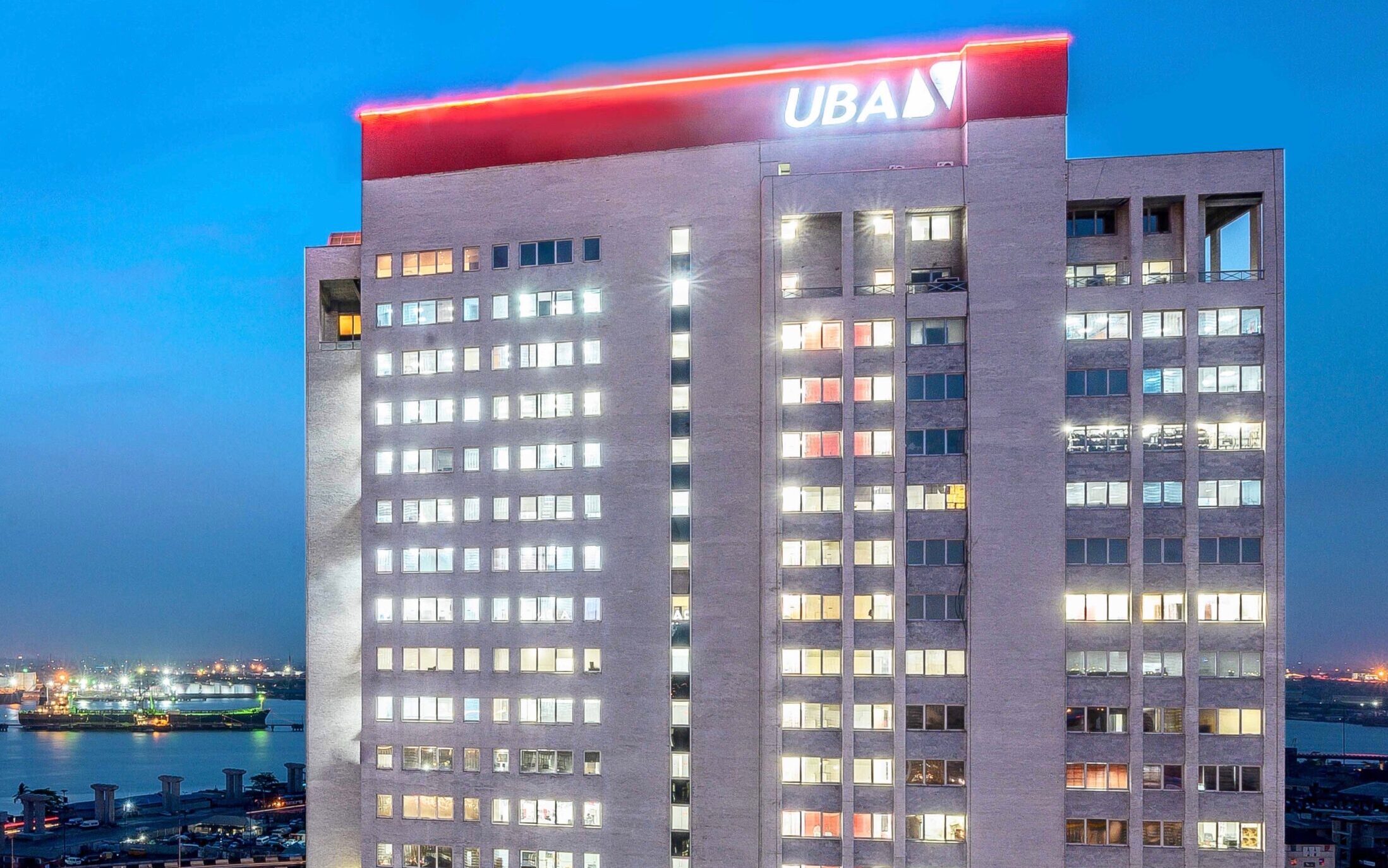
The United Bank for Africa (UBA) has pledged to strengthen financing partnerships to help Chad realise its $30 billion Tchad Connexion 2030 plan, which seeks to expand power, water and infrastructure across the country.
UBA’s Group Managing Director, Oliver Alawuba, made the commitment on Monday in his keynote address at the UAE–Chad Trade and Investment Forum held in Abu Dhabi. The forum’s theme was “Financing African Competitiveness – Building Bridges, Powering Progress.”

“We are here to discuss a subject that is both an imperative and an opportunity: financing African competitiveness,” Mr Alawuba said. “For too long, the narrative around Africa has been one of potential. But I stand before you today to declare that the era of potential is over. We are now in the era of execution.”
The GMD described Tchad Connexion 2030 as a “declaration of intent” to move Chad from the margins to the centre of global competitiveness.
The programme outlines 268 projects in infrastructure, industrialisation and human development, including targets to raise electricity access to 60 per cent by 2030 and provide clean water for 11 million more people.
He said financing will determine whether the plan succeeds, noting that strong partnerships can turn Chad’s goals into “bankable projects that attract both domestic and international capital.”

Infrastructure gap
Africa faces an annual infrastructure financing gap of $68–108 billion, according to the African Development Bank (AfDB), which estimates total needs at $130–170 billion each year. The bank lists power, transport and water as the most underfunded sectors.
Mr Alawuba said UBA is working to bridge this gap through regional partnerships and new financial structures that mobilise Africa’s domestic capital, estimated at $4 trillion.
“The challenge has never been a lack of capital, but a lack of bankable structures and credible partnerships,” he said, citing data from the Africa Finance Corporation showing that less than 15 per cent of Africa’s domestic financial assets flow into productive infrastructure.
He highlighted several of UBA’s investments across the continent. In Tanzania, the bank financed $400 million for the Julius Nyerere Hydropower Project; in Nigeria, $700 million in the power sector and participation in a $10 billion syndication for the Dangote Refinery; and in Ghana, $315 million for road infrastructure.
In Chad, UBA has already committed $102 million through state securities and national projects, including a $49 million domestic gas project, a $6.7 million wind farm in Amdjarass, and funding for road maintenance and telecom modernisation.
He said the bank’s reach into remote towns such as Beira (Mozambique), Nzérékoré (Guinea) and Gulu (Uganda) demonstrates its strategy of financing competitiveness “from the ground up.”
Partnerships
Mr Alawuba said Africa’s transformation depends on structured partnerships among international investors, African banks and development finance institutions.
He urged stronger cooperation with Gulf investors, noting that the UAE’s growing role in African projects could speed up industrial and digital growth.
He cited UBA’s Banking on Africa’s Future whitepaper, presented at the World Bank–IMF meetings, which found that African anchor investments can attract global capital at ratios of 10-to-1 or higher, a model he said could unlock financing for Chad’s 2030 agenda.
Mr Alawuba called for unity of purpose among governments and investors. Quoting Zayed Al Nahyan, the founding father of the UAE, he said transformation depends on collective effort.
“As we open this panel,” he said, “let us remember that financing African competitiveness is not an act of charity. It is the smartest investment we can make in a future of shared prosperity.”